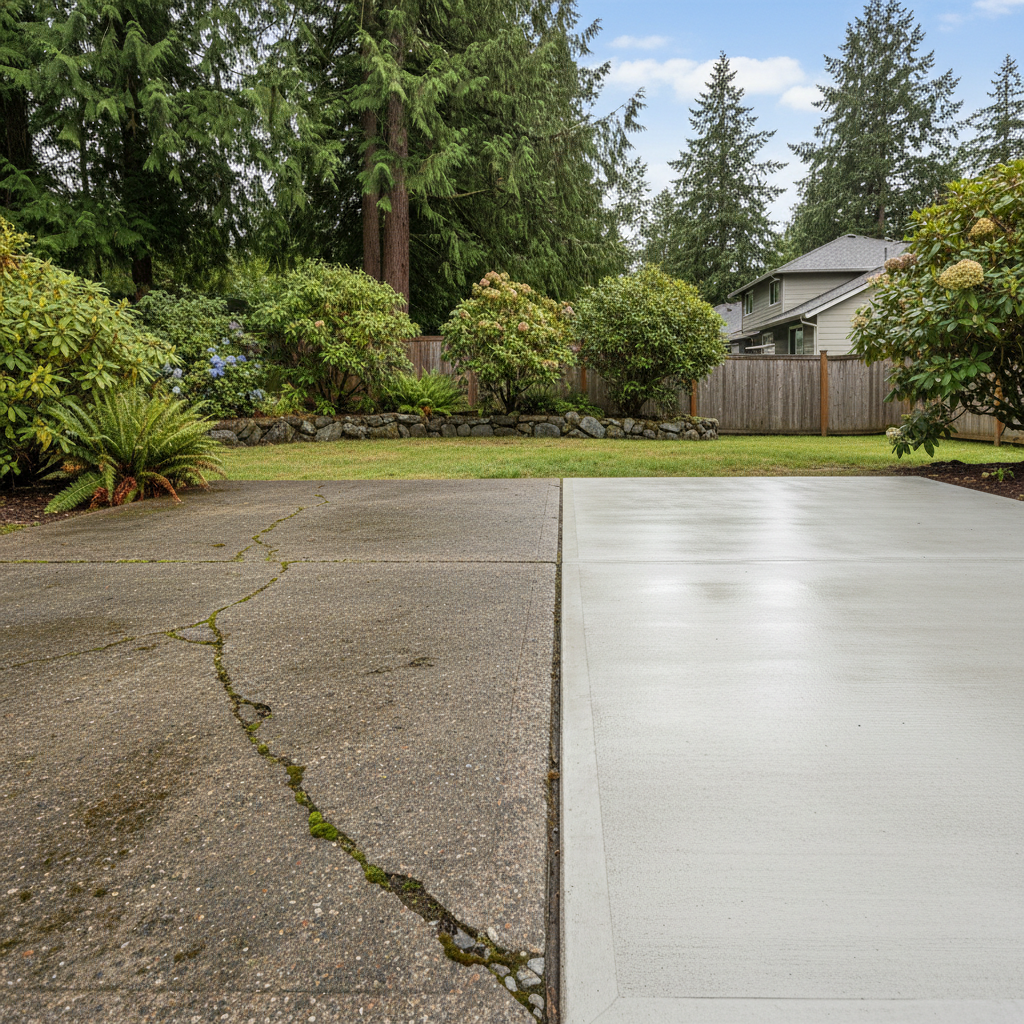
So, you're thinking about putting in a new patio, driveway, or walkway around your Bothell place. Smart move! It's a fantastic way to boost your home's curb appeal and make your outdoor spaces more useful. But then, the first big question usually pops up: should you go with poured concrete or concrete pavers? Honestly, it's a common head-scratcher, and I see homeowners wrestle with this all the time. Let's just cut to the chase and talk about what really matters for folks like you.
Poured Concrete: The Old Reliable Workhorse
Poured concrete is probably what you picture first when someone mentions flatwork. It's a mix of cement, some aggregates (like sand and gravel), and water, all blended together and poured into forms. Once it dries and hardens, you've got one solid piece. Sounds pretty straightforward, right?
Cost
Generally speaking, poured concrete often ends up being the more budget-friendly option right off the bat. The material itself can cost less, and the installation, while still needing skilled hands, can be quicker for big, simple areas. Basically, you're paying for the mix and the crew to get it down and finished.
Durability & Maintenance
A concrete slab that's been put in correctly is tough, no doubt about it. It can handle heavy stuff – think cars on a driveway – and it holds up pretty well against our Pacific Northwest weather. You'll want to seal it every few years, though, just to protect it from moisture and stains, especially with all the rain we get. The biggest downside? Cracks. Even with all our careful sub-base prep, expansion joints, and using the right mix, concrete can and does crack. It's just how the material works. When it cracks, repairs can be pretty visible, and if it's really bad, you might be looking at a full replacement down the road. What a pain!
Appearance
For a long time, poured concrete had a reputation for being pretty plain – just grey. But that's not the case anymore. You can get stamped concrete that looks like stone or brick, add color, or even expose the aggregate for a different kind of texture. It gives you a clean, continuous look, which some people really prefer.
Concrete Pavers: Flexible & Fixable
Pavers are individual pieces, usually made of concrete, that interlock or are laid very close together over a carefully prepared base of gravel and sand. Think of them almost like a giant, super-durable puzzle.
Cost
Here's where pavers usually come in a bit higher on that initial investment. The material itself often costs more per square foot, and the labor involved in laying each individual piece, cutting them to fit, and compacting the base is much more intensive. You're paying for that precision and the modular design of the product.
Durability & Maintenance
This is really where pavers shine, especially in our climate. Because they're separate units, they have some give. When the ground shifts – and believe me, with our clay soils around Bothell, the ground *will* shift – pavers can move along with it a bit. This makes them way less likely to crack than a solid slab. If one paver gets damaged, stained, or lifts because of tree roots, you can usually just pull out and replace that single unit. That's a huge benefit! You'll still want to sweep in joint sand periodically and maybe seal them, but overall, fixing individual pieces is much simpler.
Appearance
Pavers offer a massive array of aesthetic choices. Different shapes, sizes, colors, textures – you name it. You can create intricate patterns, borders, and really customize the look to match your home's style perfectly. From a rustic, tumbled appearance to sleek, modern lines, there's a paver for almost any design idea you can dream up.
So, What's My Take?
Look, both options are good, and both definitely have their place. If you're on a tighter budget and just need a solid, dependable surface, especially for a big, straightforward area, poured concrete is a perfectly fine choice. Just go into it knowing that cracks are a possibility and repairs might stand out.
However, if your budget allows for it, and you're after something that offers more design flexibility, easier repairs down the road, and better resistance to settling and cracking in our often-wet, shifting soil conditions, I'm going to lean towards concrete pavers. The ability to replace individual units is a pretty big deal when you're thinking about the long haul.
For driveways, especially, where you've got heavy vehicles and a lot of stress, pavers often outperform concrete over many years because of their inherent flexibility. For a simple backyard patio where aesthetics are super important and you want something unique, pavers give you so much more to work with. What do you think?
Ultimately, the best choice depends on your specific needs, your budget, and the look you're trying to achieve. We've done plenty of both here at Bothell Concrete Solutions, and we're always happy to chat through your project and help you figure out what makes the most sense for your home.