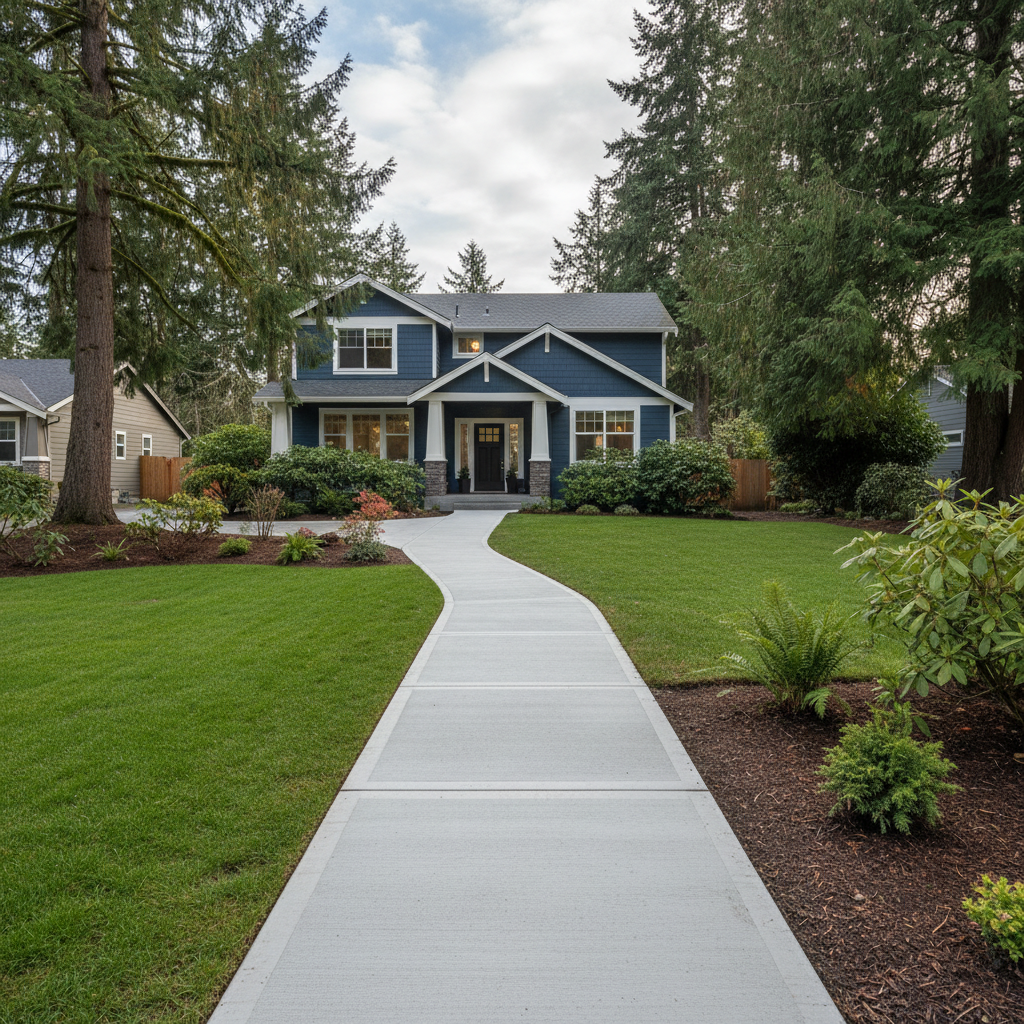
So, you're thinking about a new concrete sidewalk, right? Maybe you want to connect your front door right to the driveway, or perhaps a nice, winding path around the side of the house. Sounds pretty straightforward, but believe me, I've seen folks here in Bothell make some truly baffling mistakes that end up costing them time, money, and a whole lot of headaches. Let's dig into what you really need to steer clear of.
Skimping on the Prep Work
This is probably the biggest blunder, honestly. People look at the finished concrete and think that's the whole story. It's not. The foundation — all that stuff you can't see — is what truly makes or breaks a sidewalk. If the ground isn't properly graded, compacted, and ready, you're just asking for trouble. We get a ton of rain here in Bothell, and if water isn't draining away from your slab, it's going to undermine it. You'll end up with cracks, uneven spots, and eventually, a total mess. I've seen sidewalks in some of those older, established neighborhoods near Main Street that have sunk or heaved just because the original builders didn't bother with a proper sub-base. Don't let a contractor rush this part. Ask them, specifically, about their process for grading and compaction. If they brush you off? That's a huge red flag.
Ignoring Drainage Needs
This ties right into prep work, but it's so important it deserves its own heading. Where will the water go when it rains? And I mean when it *really* rains, like it does for weeks on end sometimes. Your new sidewalk shouldn't create new puddles or, worse, direct water straight toward your house's foundation. A good contractor will plan for the right slope and proper drainage. Sometimes that means adding a French drain, or just making sure the grade sends water to a safe spot. If your contractor isn't talking about drainage, you absolutely need to bring it up. It's not just about the concrete itself; it's about how that concrete fits into your whole property.
Choosing the Wrong Mix or Finish
Concrete isn't just concrete, you know. There are different mixes for different jobs. For sidewalks, you need a durable mix that can handle foot traffic, those freeze-thaw cycles we get, and general wear and tear. Some folks try to save a few bucks by picking a cheaper, lower-strength mix, and they almost always regret it within a few years. Also, give some thought to the finish. A super smooth, troweled finish looks nice, but it can get incredibly slippery when wet. Especially with our damp climate, a broom finish or an exposed aggregate can give you much better traction. It's a small detail, but it makes a big difference for safety.
Falling for the Lowest Bid
Look, I totally get it. Everybody wants a good deal. But when it comes to concrete, the lowest bid often turns out to be the most expensive in the long run. Cheap contractors cut corners. They might use less rebar or mesh, skimp on the concrete mix, or rush through the prep work. Then, a year or two later, you're calling someone like Bothell Concrete Solutions to fix cracks, replace sections, or even tear out and re-pour the whole thing. Get multiple bids, sure, but don't just look at the bottom line. Compare what's actually included in that price. Ask about their insurance, their experience, and their warranty. A reputable contractor stands behind their work, period.
Not Getting a Clear Contract
This one seems obvious, but you'd be surprised how often it happens. You absolutely need everything in writing. What's the exact scope of work? What type of concrete mix will they use? What kind of finish? How many control joints? What's the timeline? What's the payment schedule? What happens if there are unforeseen issues? Don't rely on a handshake or a verbal agreement. A solid contract protects both you and the contractor. If a contractor hesitates to put things in writing, walk away. Just walk away.
Forgetting About Permits
Depending on where your sidewalk is going and how big the project is, you might need a permit from the City of Bothell. This is especially true if you're connecting to a public right-of-way or making big changes to your property's grade. A good contractor will know all about this and either handle the permitting process for you or at least guide you through it. If they tell you,