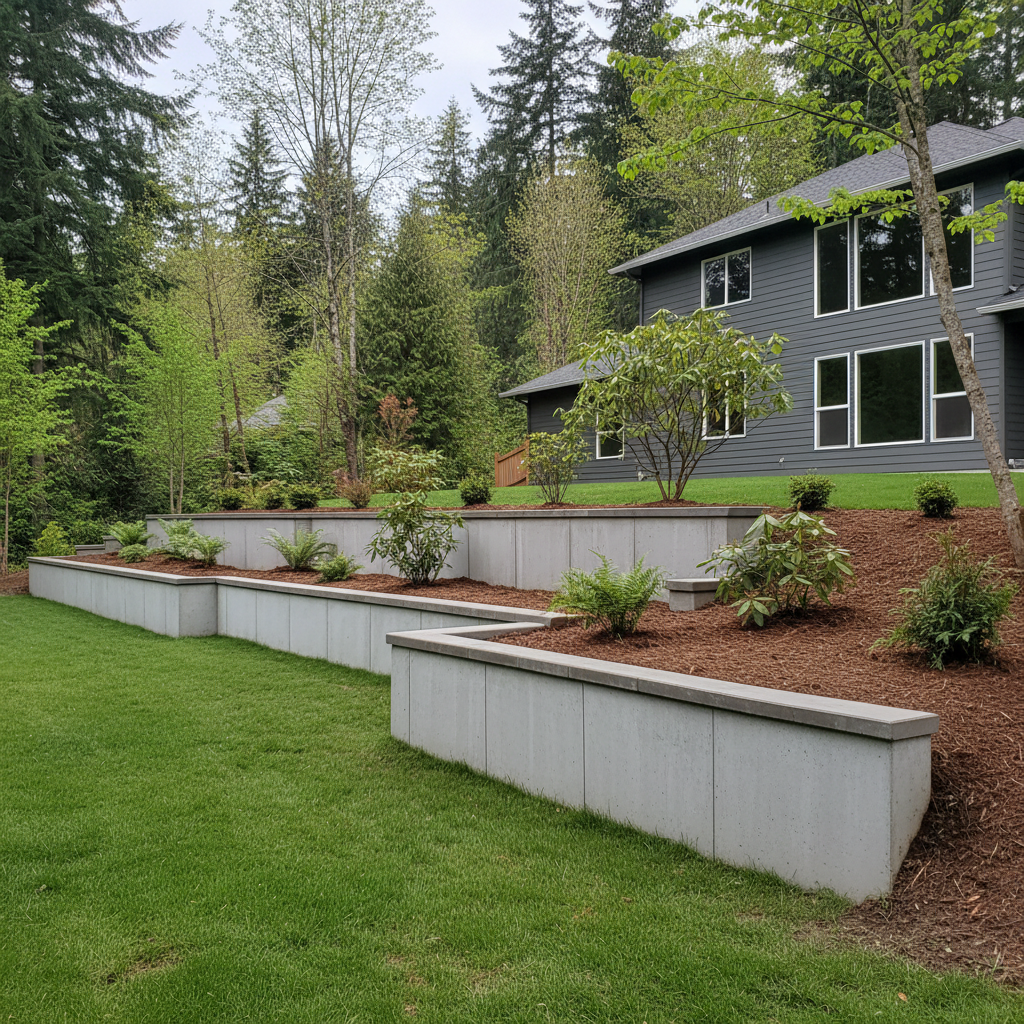
So, you need a retaining wall. Maybe your yard has a bit too much slope, or you're just trying to carve out some flat, usable space. That's a smart move, by the way. A well-built concrete retaining wall can really boost the value and function of your Bothell home. But, I've seen plenty of folks make some pretty basic — and frankly, expensive — mistakes when they're planning or hiring for these kinds of projects.
Mistake #1: Skipping the Engineer's Report (or getting a bad one)
This is probably the biggest blunder, and it's a huge red flag if a contractor tells you it's not necessary for anything over a couple of feet high. Look, concrete retaining walls aren't just for show. They're holding back tons of soil, water, and sometimes even structures. You absolutely need a structural engineer to design that wall. They'll consider things like your soil type, drainage, the wall's height, any surcharge loads (like a driveway or patio sitting behind it), and seismic activity. We're right in an active seismic zone here in the Pacific Northwest, and our clay-heavy soils around places like Canyon Park can get saturated and incredibly heavy. An engineer's stamp isn't just a piece of paper; it's your guarantee that the wall won't lean, crack, or, worst case, completely fail.
What to watch out for: If a contractor claims they can 'eyeball' it, or just use a standard design for a significant wall, turn around and walk away. Fast. A good contractor will insist on an engineer's design, and they'll work closely with that engineer to make sure the plans are solid and actually buildable.
Mistake #2: Underestimating Drainage Requirements
Water is the arch-nemesis of any retaining wall. If you don't manage it, water will build up behind the wall, creating immense hydrostatic pressure. That pressure can push even the strongest concrete wall right out of place. It's like trying to hold back a dam with your bare hands. You just can't win.
A proper retaining wall design always includes robust drainage. We're talking perforated pipes (like French drains) tucked behind the wall, gravel backfill, and weep holes to let that water escape. I've seen walls fail because someone skimped on the drainage, and it's always a nightmare to fix. You're basically rebuilding the whole thing, aren't you?
Make sure your contractor clearly explains their drainage plan. Ask about the type of pipe they'll use, the gravel, and how they'll make sure water doesn't just sit there. If they can't give you a clear, detailed answer, that's a problem.
Mistake #3: Focusing Only on the Lowest Bid
I get it. Money matters. Everyone wants a good deal. But with something as important as a retaining wall, the lowest bid often turns out to be the most expensive in the long run. Why? Because cutting corners on materials, labor, or engineering always leads to problems down the road.
When you're comparing bids, don't just stare at the bottom line. Look at what's actually included. Does it cover the engineer? Permitting? Proper excavation? High-quality concrete and rebar? The right backfill and drainage materials? A contractor who bids significantly lower than everyone else is probably cutting something out, and you really don't want to find out what that is after the wall is built.
Ask for detailed breakdowns. Understand exactly what you're paying for. A good contractor, like us at Bothell Concrete Solutions, will be totally transparent about costs and explain why certain steps or materials are necessary.
Mistake #4: Not Checking for Permits
This one really goes hand-in-hand with the engineer's report. Most retaining walls over a certain height (often 3 or 4 feet, depending on local codes) require a building permit from the city of Bothell. This isn't just bureaucracy; it's a safety check. The city wants to make sure the wall is designed and built correctly to protect you and your neighbors.
If a contractor suggests skipping the permit, that's a huge red flag. It means they're either inexperienced, trying to hide something, or both. You could face fines, be forced to tear down the wall, or have serious issues if you ever try to sell your home. Always ensure your contractor handles the permitting process or guides you through it properly.
Mistake #5: Ignoring the Foundation and Soil Prep
A retaining wall is only as good as its foundation. If the ground it's sitting on isn't prepared correctly, the wall will settle unevenly, crack, or fail. This means proper excavation, compacting the subgrade, and often pouring a substantial concrete footing. Our Bothell soils can vary wildly, from stable glacial till to more problematic silty clays. Knowing the specific soil conditions on your property is absolutely crucial.
Don't let anyone just dig a shallow trench and start pouring. The footing needs to be deep enough, wide enough, and properly reinforced to spread out the load. Ask your contractor about their excavation and foundation plan. A solid foundation is non-negotiable for a long-lasting retaining wall.
Getting a concrete retaining wall built right the first time saves you a ton of headaches and money. Do your homework, ask the tough questions, and don't settle for anything less than a professional job. Your property, and your peace of mind, are definitely worth it.