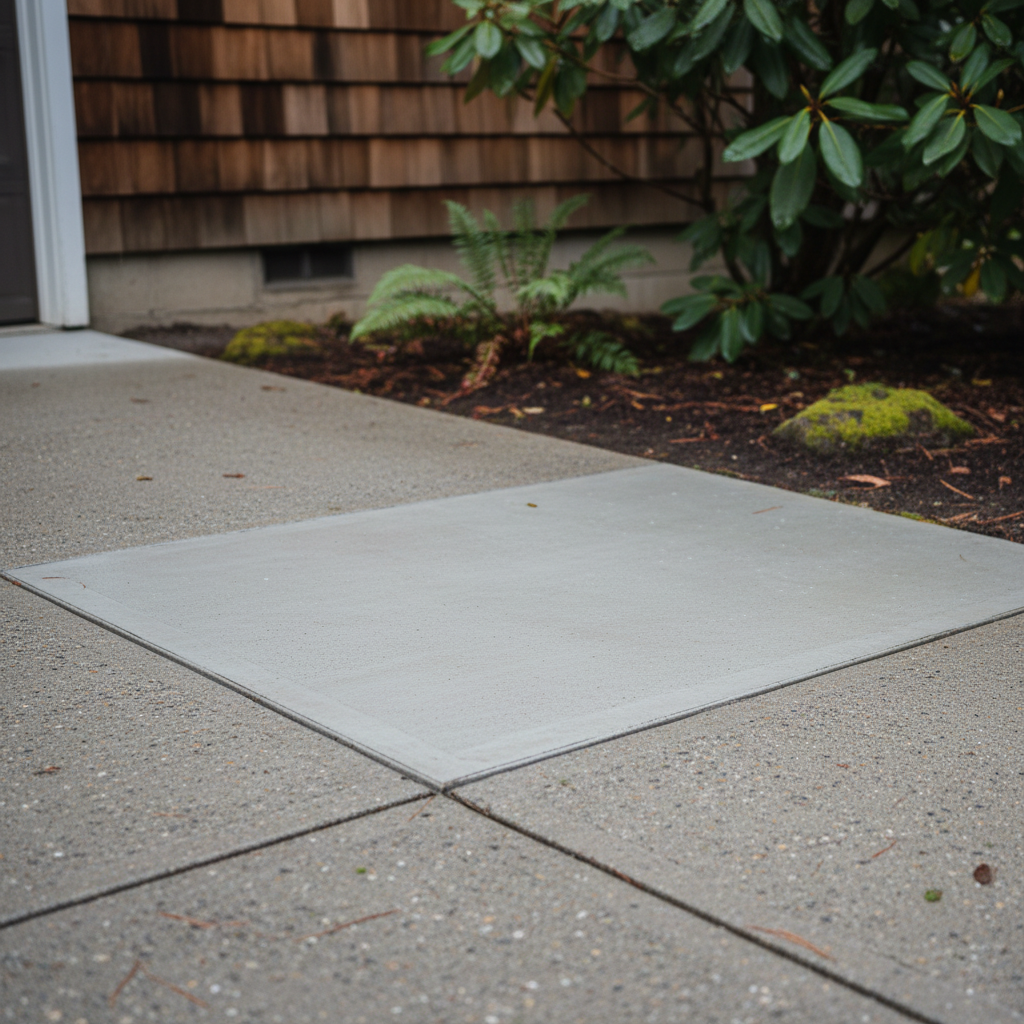
Alright, let's talk concrete repair. I've been doing this for a long time here in Bothell, and I hear the same questions over and over again from folks just like you. It's good to ask, because you don't want to mess around when it comes to your home's foundation or walkways. So, I'm just going to lay out some of the most common questions and give you the straight goods, no fluff.
What's the difference between concrete repair and replacement?
This is probably the first thing people wonder when they see a crack. Repair means we're fixing the concrete that's already there – maybe filling a crack, lifting a sunken slab, or resurfacing a spalled area. Replacement, on the other hand, means we're tearing out the old stuff completely and pouring new concrete. Think of it like this: if your car has a flat tire, you repair it. If the engine blows, you replace it. It's a big difference in cost and scope, obviously.
Generally, if the damage is isolated, cosmetic, or due to minor settling, repair is often the way to go. But if you've got widespread cracking, significant structural issues, or the concrete is crumbling in large sections, you're probably looking at replacement. We'll always assess it honestly and tell you which makes more sense for your specific situation and budget.
How long does concrete repair actually last?
That's a fair question, and the honest answer is: it depends. A good repair, done right, can last for many years, sometimes even decades. We're talking about professional-grade materials and techniques here, not just slapping some caulk in a crack.
For instance, if we're doing slab jacking (or concrete leveling), and we fix the underlying soil issue that caused the sinking in the first place, that repair can hold up for a very long time. If it's just a surface crack that we fill with a high-quality, flexible sealant, it'll protect against water intrusion for years. The lifespan really comes down to the type of repair, the quality of the materials, the skill of the crew, and how well you maintain it afterward. Things like heavy vehicle traffic or the extreme weather cycles we get here in the Pacific Northwest can impact longevity, too.
Can I just fix small cracks myself with stuff from the hardware store?
You can, sure. But should you? That's another story. For tiny, hairline cracks that are purely cosmetic, a DIY crack filler might hold up for a bit. But most homeowners underestimate what's actually going on underneath. A crack isn't just a surface problem; it's often a symptom of something deeper, like soil movement, tree roots, or water drainage issues.
If you just fill a crack without addressing the root cause, it's probably going to reappear, often wider or in a new spot nearby. Plus, store-bought fillers aren't always designed for the long haul or for structural integrity. You might save a few bucks upfront, but you could end up with a bigger, more expensive problem later. It's like putting a band-aid on a broken bone. For anything more than a pencil-thin crack, or if you see multiple cracks, it's best to get a pro out to look at it, don't you think?
My concrete driveway is sinking near the garage. What's causing that?
Ah, the classic sinking slab. I see this a lot, especially in older Bothell neighborhoods where homes were built on less-than-ideal fill dirt or where drainage wasn't perfectly accounted for. A few common culprits:
- Poor Soil Compaction: When the ground wasn't properly packed down before the concrete was poured, it settles over time, creating voids beneath the slab.
- Water Erosion: Rainwater, especially with our heavy Bothell winters, can seep under the slab, washing away the soil support. This is super common near downspouts or areas with poor grading.
- Tree Roots: As trees grow, their roots can push up concrete, and then when the roots die or are removed, voids are left behind.
- Heavy Loads: Repeatedly parking heavy vehicles in the same spot can speed up soil compression.
We usually fix this with a process called slab jacking or concrete leveling, where we inject a material (often polyurethane foam) under the slab to lift it back into place and fill those voids. It's a lot less invasive and costly than tearing out and repouring.
Is concrete repair messy or disruptive to my yard?
Compared to a full replacement, concrete repair is usually much less disruptive. For slab jacking, for example, we drill small, dime-sized holes in the concrete. The injection process is pretty clean, and the holes are patched up afterward. There's no heavy excavation, no big piles of broken concrete, and usually, you can use the repaired surface within hours, not days or weeks.
Of course, any work on your property will involve some activity. We'll bring equipment, and there will be some noise. But our goal at Bothell Concrete Solutions is always to be as efficient and tidy as possible. We'll protect your landscaping and clean up thoroughly when we're done. It's a far cry from the mess of a full demolition and pour.
When is it too late to repair concrete?
It's too late when the concrete is so deteriorated that a repair won't hold up or won't be cost-effective. If your concrete is:
- Severely spalled or pitted: Meaning the surface is flaking off in large areas, exposing the aggregate underneath.
- Cracked into many small, interconnected pieces: Often called 'alligator cracking,' this indicates widespread structural failure.
- Heavily fragmented or crumbling: If you can easily break off pieces by hand, it's probably beyond repair.
- Sinking significantly with large, unrepairable voids: Sometimes the ground has shifted so much that leveling isn't practical or won't last.
Basically, if the integrity of the concrete itself is gone, a repair is just a temporary patch on a bigger problem. At that point, replacement is the only sensible option. We'll tell you straight if we think you're throwing good money after bad with a repair.
How does Bothell's weather affect concrete repair?
Our weather here in Bothell, with its wet winters and occasional freezing temperatures, plays a big role in concrete damage and repair. Water is concrete's enemy. When water gets into cracks and then freezes, it expands, making those cracks bigger. This freeze-thaw cycle is a major cause of spalling and cracking.
When we do repairs, we have to consider the weather. For instance, some repair materials need specific temperature ranges to cure properly. We're not going to try to do a major repair on a day when it's pouring rain or below freezing, because it just won't last. We'll schedule the work for optimal conditions to ensure the repair is durable and effective against our local climate challenges. You want a repair that can stand up to those long, gray, rainy stretches we're known for.